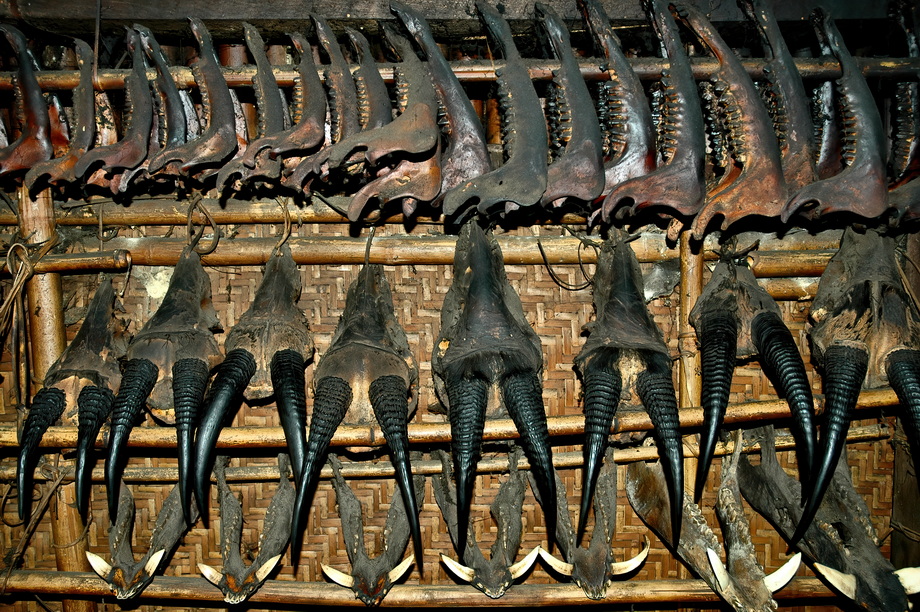
The Idu Mishmi are an Indigenous ethnic group primarily living in the northeastern Indian state of Arunachal Pradesh, especially in the districts of Dibang Valley and Lower Dibang Valley. Smaller communities also live in parts of India and near the border with China.
Known for their unique hairstyle, intricate weaving, and animistic beliefs, they maintain a deep, spiritual connection to nature, viewing tigers as their "elder brothers".
Language. They speak the Idu Mishmi language, part of the Tibeto-Burman language family. The Idu Mishmi language is considered endangered.
Cultural Identity. Historically referred to as Chulikata (meaning "hair-cut" in Assamese) due to their distinct hairstyle. Idu mythology holds that they are siblings to tigers, making hunting them a strict taboo viewed as fratricide.
They are known for rich oral traditions, distinctive woven clothing, and ceremonial practices.
Belief System. They are largely animists, practicing a system of "Uyu" (spirits) where nature is considered sentient and sacred, though some now follow Buddhism or Christianity. The priest-shamans, called igu, play an important role in rituals and storytelling. Their culture has a strong connection to forests, mountains, and river ecosystems in the eastern Himalayas.
Social Structure. They live in, or originate from, traditional bamboo longhouses raised on stilts. Their traditional laws, known as ena, govern their interaction with the environment.
 Extended info about Idu Mishmi People