
Totora reed boats are vessels crafted since pre-Hispanic times from the stems and leaves of the totora reed in coastal areas of northern Peru, such as Santa Rosa, Pimentel, and Huanchaco, and in lake regions of Bolivia, such as Copacabana and the area around Lake Titicaca.
This type of totora reed boat is made of tightly bound bundles of reeds. It is characterized by its sharp, upward-curving bow, which allows it to cut through the waves, and by its wider stern. It can reach a length of 3 to 4 meters and a width of 0.6 to 1 meter. Its weight varies between 47 and 50 kg, and it can carry a payload of up to 200 kg. It is designed to transport a navigator and their fishing gear during fishing operations at sea. This vessel was used by the Lambayeque or Sicán, Mochica, Chincha, Chimú, and Inca cultures. The name "caballito" (little horse) comes from the first Spaniards who arrived on the coasts of Lambayeque and La Libertad, who called it that because of the way the fishermen navigated, straddling the frame with their feet in the water, although the terms raft or small raft are considered more accurate. It was declared a Cultural Heritage of the Nation on August 23, 2003. Huanchaco traditional fishers are famous for paddling out at dawn on caballitos de totora.
These are used as a means of transport or for fishing activities. They are larger than the small rafts of the coast, some equipped with a longer mast for the sail. On January 18, 2013, the knowledge and practices of using totora reeds by the Uru people, renowned builders of totora reed rafts and "floating islands," were declared a cultural heritage of the nation.


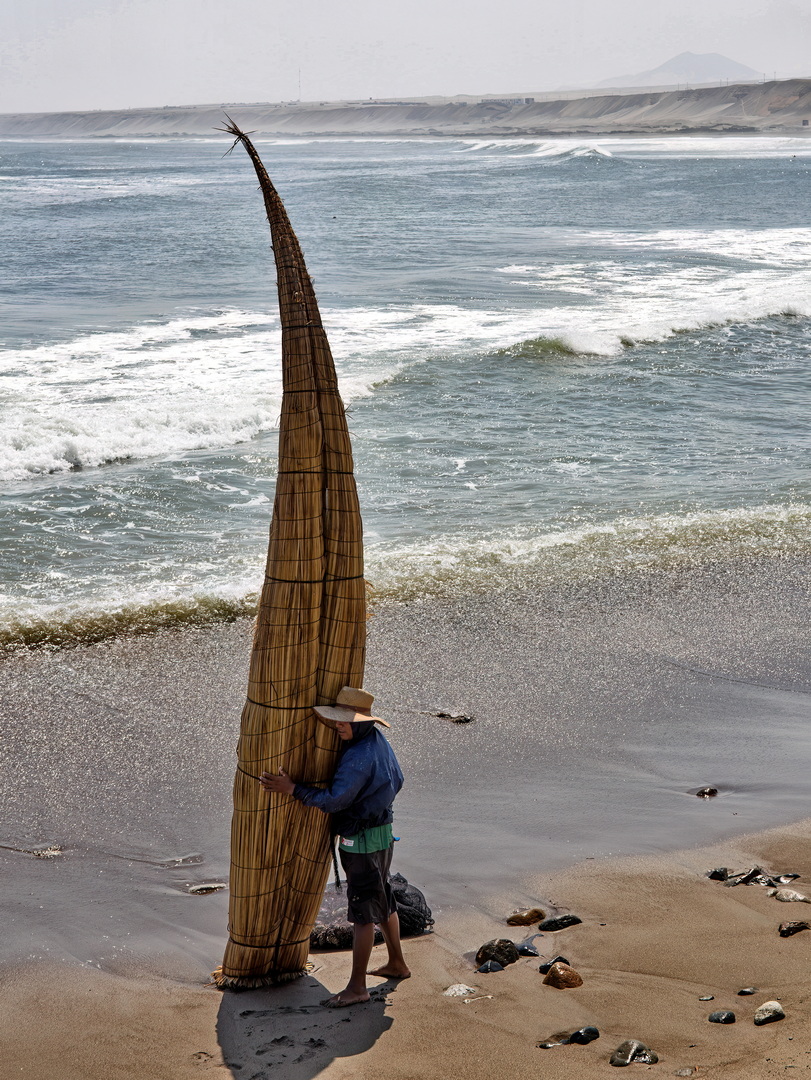


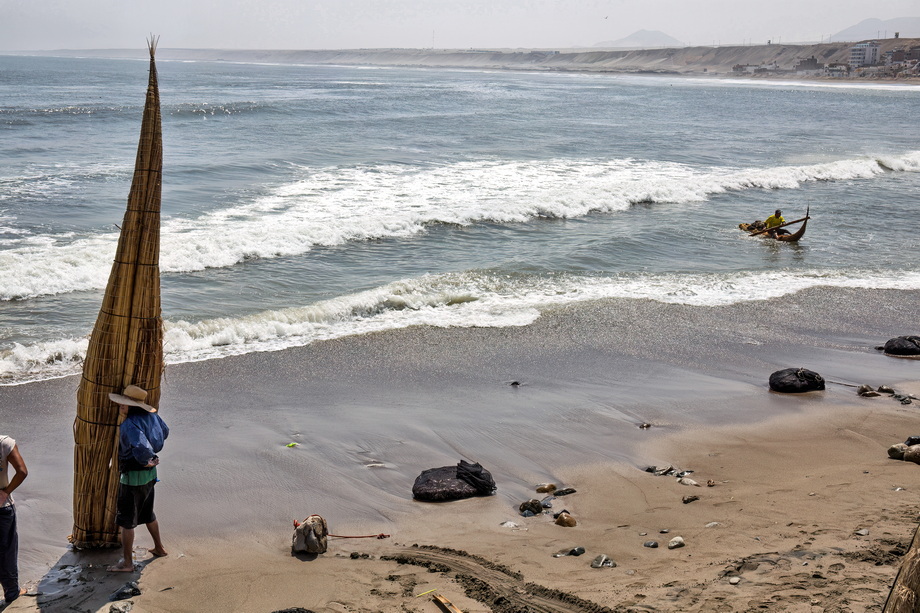

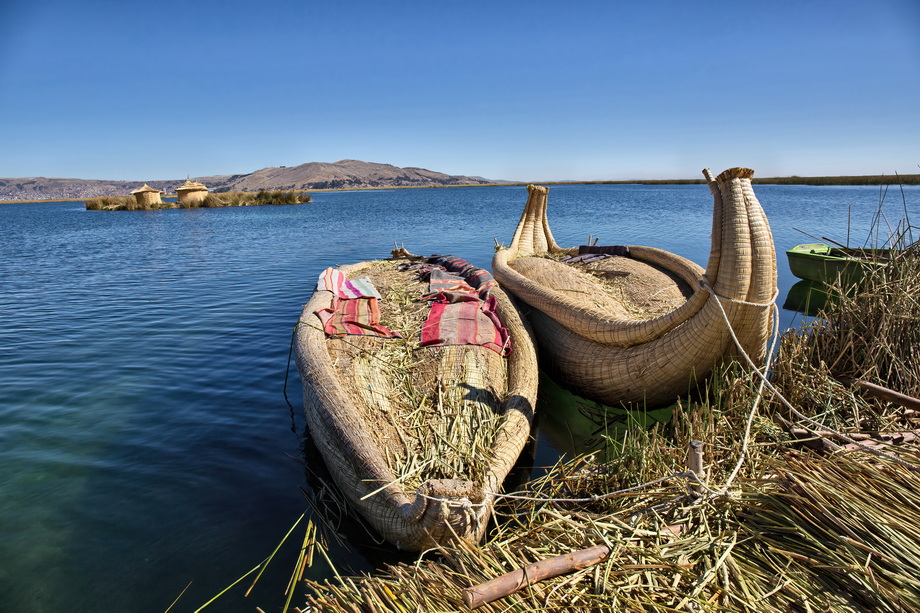
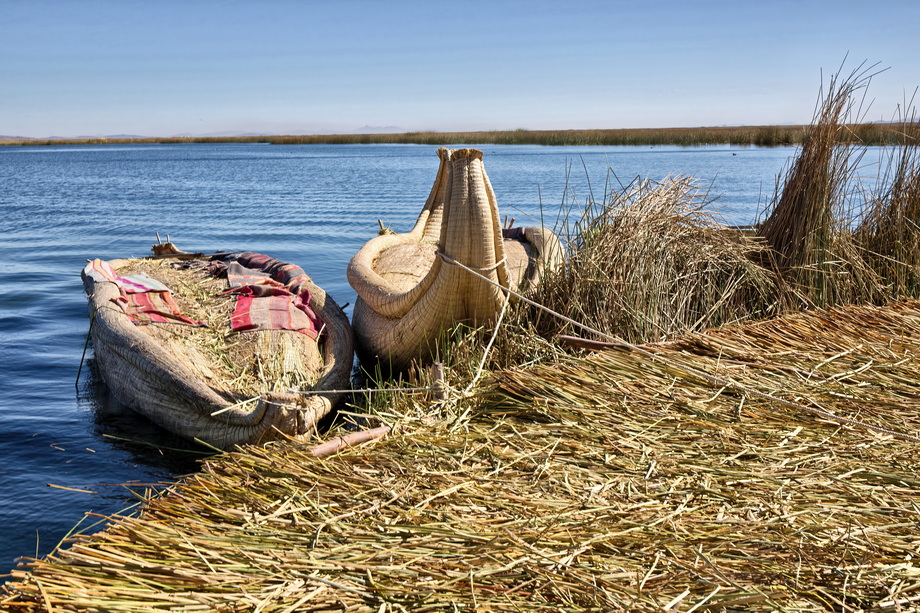
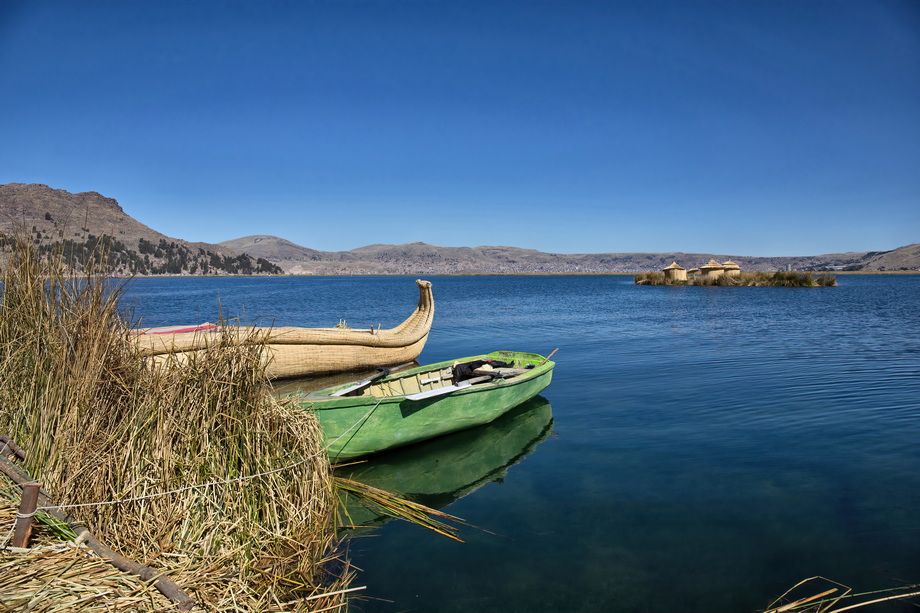
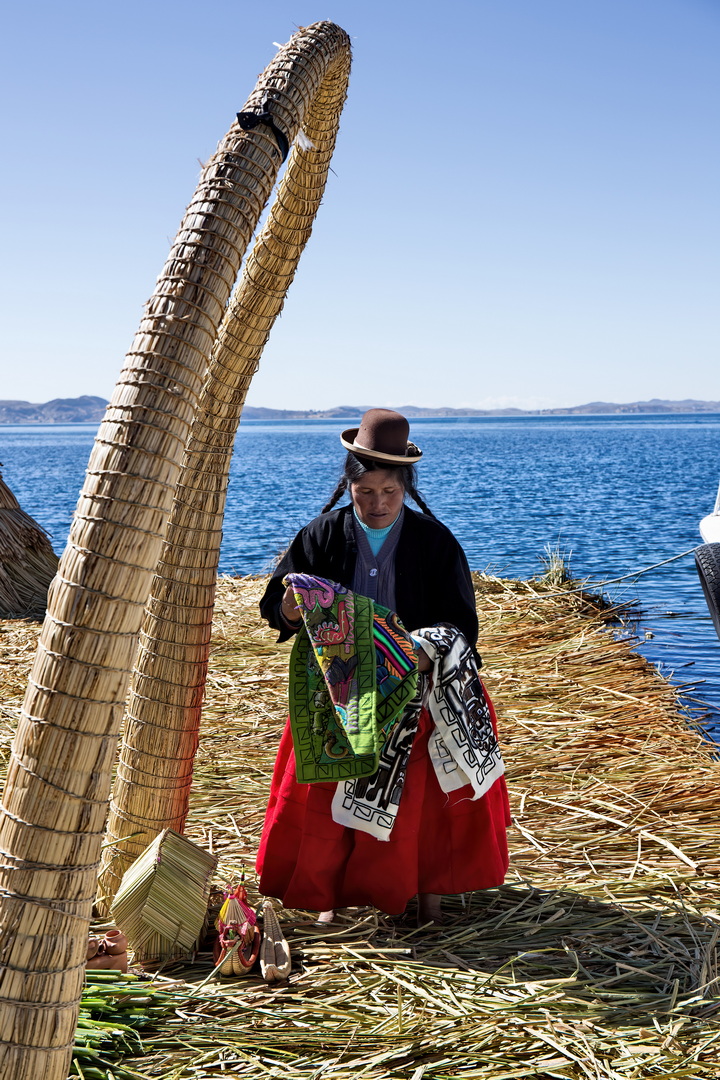
Photo Gallery: © Jordi Zaragozà Anglès / Peru - 2015